












Gutter Cleaning & Maintenance: The Complete Homeowner’s Guide

| Caution: If your home is more than one story tall—or if working on a ladder ever feels unsafe—hire a professional to avoid injury.
Why You Should Clean Your Gutters
Gutters move rainwater away from your home’s most vulnerable components. Without regular upkeep, they can create costly problems:
- Obstructed gutters. Leaves, twigs, and debris clog gutters and downspouts, forcing water to overflow. Overflow can damage shingles, underlayment, and decking and may cause interior leaks that stain ceilings and walls, damage floors, and encourage mold growth.
- Winter hazards. In cold climates, trapped water can freeze, push ice under shingles, and lead to leaks as heat from the home melts it. The combined weight of debris, water, and ice can also cause gutters to sag or pull away, damaging the fascia board.
- Foundation damage. Overflow that spills to the ground can pool around the foundation, saturate soil, and increase the risk of cracks, misaligned door frames, wall fissures, and water intrusion in basements or crawl spaces.
Routine Maintenance Tips
- Clean twice a year: once in spring and once in fall.
- Post-storm check: after heavy rain, confirm water flows freely through gutters and downspouts.
- Pro tip: Dry debris is easier to remove—clean after a couple of rain‑free days when possible. If not, be prepared for heavy, wet leaves.
Safety First
Ladder Safety
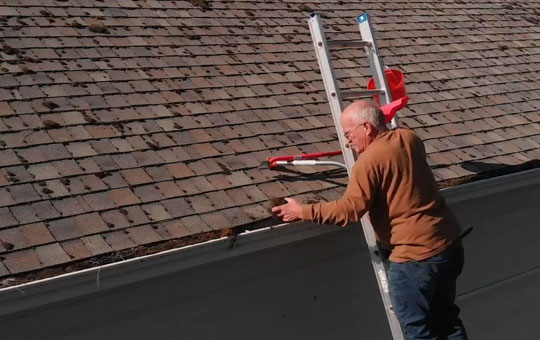
- Use a quality extension ladder and set it on level, firm ground.
- Never stand on the top three rungs and don’t reach beyond the side rails.
- Hang a bucket from the ladder with a hook to collect debris, or lay a drop cloth away from the ladder feet to catch debris. Do not place the ladder on a plastic tarp.
- For more guidance, consult reputable buyer’s guides to ladders and scaffolding.
Protective Gear
- Wear durable work gloves to guard against sharp metal edges.
- For wet debris, layer nitrile gloves under work gloves for grip and protection.
- If power lines are nearby or you’re uneasy on a ladder, hire a professional.
Step‑by‑Step Gutter Cleaning (By Hand)
These clear steps will help stop overflows and keep water moving where it belongs.
Step 1: Clear debris near the downspout.
Start at the downspout. Use your hand or a small trowel to remove debris. If your system includes downspout strainers, remove and clean the strainers.
Step 2: Flush gutters with a hose.
Use a hose (a gutter‑cleaning nozzle helps) to flush debris from the far end toward the downspout. Don’t spray under the shingles to avoid loosening them. If water doesn’t flow out, the downspout may be clogged.
Step 3: Unclog the downspout.
If sections are removable, loosen the brackets, slide the section out of the outlet, and rinse. Place a bucket under the outlet to catch debris. If the downspout ties into an underground drain, clear blockages with a hand‑operated drain snake; a drill‑powered auger can speed this up.
Step 4: Adjust gutter slope (pitch) if needed.
Re‑flush and check for standing water. If water pools, the pitch may be insufficient. Aim for about 1/4 inch per 10 feet (≈6 mm per 3 m) toward the downspout. Work in short segments, removing hangers as needed, and reinstall hangers every 2–3 feet to prevent sagging.
Step 5: Install or replace hangers (screw & ferrule or hidden hangers).
Mark hanger locations, drill through the gutter lip and into the fascia, and secure according to the manufacturer’s instructions. For homes without fascia boards, use roof‑strap hangers that fasten over the gutter channel and under the shingles only if permitted by your roof warranty.
Step 6: Repair leaks.
Clean and dry the area. Tighten gutter sections, then apply gutter sealant to the joints—primarily from the inside of the gutter; you may add a thin exterior bead if recommended by the product. Choose sealants compatible with your gutter material (aluminum, steel, or fiberglass). Touch up appearance by repainting if needed.
Step 7: Install gutter guards.
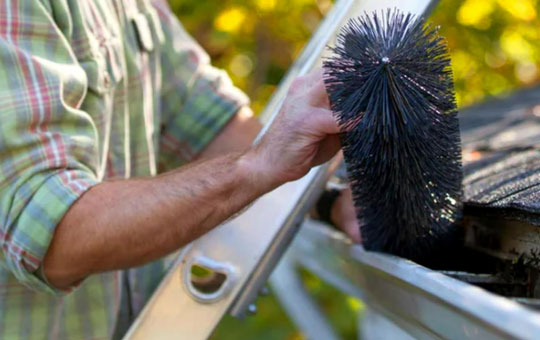
Guards reduce debris buildup and future cleaning. Choose a type designed for your gutter profile; many fasten to the gutter lip, while some styles slip slightly under the first course of shingles—use only if compatible with your roof warranty. In spring and fall, brush off accumulated leaves and rinse the guards to prevent blockages.
Step 8: Ongoing maintenance.
Check twice per year to ensure rainwater flows properly. Refer to manufacturer guides or trusted home‑improvement resources for additional tips.

No‑Ladder Method: Using a Leaf Blower
Step 1: Connect the attachment.
Attach the gutter‑cleaning kit (adapter, extensions, and U‑shaped nozzle). Ensure extensions are secure so you can reach the gutter from the ground. Stand clear of falling debris and avoid overtightening plastic couplers.
Step 2: Blow out debris.
Start the blower and direct the nozzle so debris moves away from you. Work with the wind and reposition as needed to avoid damaging shingles or gutters.
Step 3: Disassemble and store.
Detach the kit and stow the blower and accessories.
Shop smart: Choose universal attachments that fit your blower and provide up to ~12 feet of reach for most single‑story homes.
When to Repair or Replace Gutters
- Overflowing gutters. First, clean and clear obstructions. If overflow persists, gutters may be undersized or incorrectly sloped—consult a professional.
- Sagging gutters. Prolonged clogs or inadequate hanger spacing can cause sagging. Loose hangers or damaged fascia should be inspected and repaired by a pro.
- Loose downspouts. If you’re comfortable, tighten screws or replace stripped fasteners; otherwise, hire a professional.
- Rusty gutters. Small rust spots can be patched with self‑adhesive flashing tape or compatible patch kits. Severely rusted sections usually require replacement.
How Often Should You Clean Gutters?
With proper care, gutters can last up to 20 years. To prevent clogs and damage, clean them twice a year—once in spring and once in fall. Severe weather or falling branches may cause damage that requires earlier cleaning or even replacement.
Bottom line: Regular maintenance saves time and money and protects your roof, foundation, and interior from costly water damage. Follow the steps above and add quick seasonal checks to keep your gutters performing their best.
 Top Headlines